Guides ·
Wallet Tracker Card vs AirTag: Which One Should Go in Your Wallet?
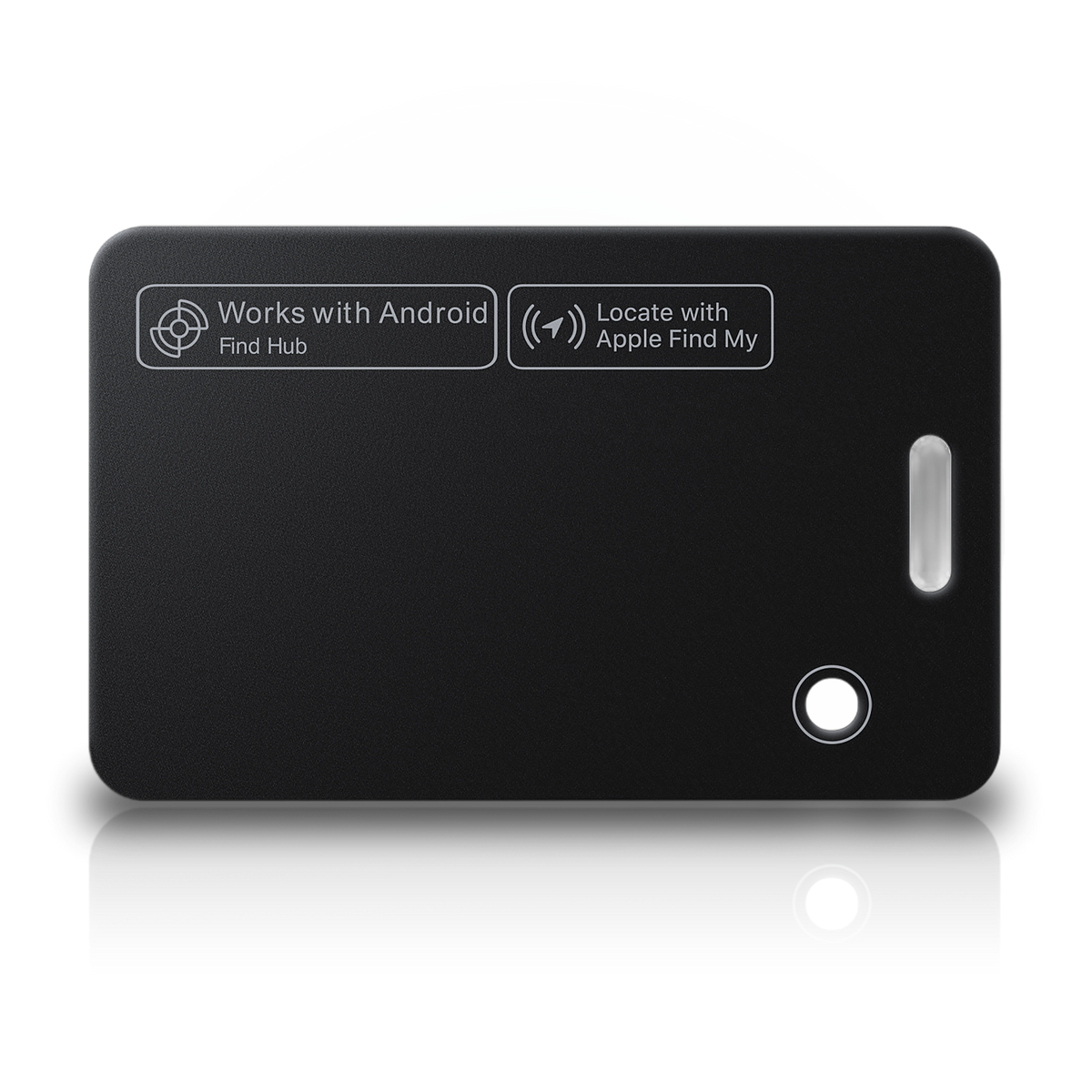
Losing a wallet is a special kind of bad: cards to cancel, an ID to replace, a few hours gone. A Bluetooth tracker fixes most of that, but the one most people already own, the AirTag, was designed for keys and bags. Here's how a card-shaped tracker compares and how to pick the right one.
The short answer
- Keys, backpacks, luggage: a round tag like an AirTag is perfect.
- Wallets and card holders: a card-shaped tracker fits in a card slot and doesn't add a bump.
- Android phone: an AirTag only works with Apple devices, so you need a tracker that supports Google's Find Hub network.
1. Thickness: the reason card trackers exist
An AirTag is about 8 mm thick. In a slim wallet that's thicker than the wallet itself, and many people end up carrying it in a separate keyring holder. A tracker card is the size of a credit card and only a couple of millimeters thick. Revenant is 1.8 mm, so it slides into any card slot next to your cards.
2. Which network it uses
Small trackers don't have GPS. They send a Bluetooth signal that nearby phones relay, anonymously, to a finding network. The bigger the network around you, the more often your tracker's location updates.
- Apple Find My: uses nearby iPhones, iPads and Macs. Works with the Find My app on iPhone.
- Google Find Hub: uses nearby Android phones. Works with the Find Hub app on Android.
Some trackers, Revenant included, can be set up with either one: Find My if you use an iPhone, Find Hub if you use Android. You pick one network during setup; you don't need a separate app or a subscription.
3. Battery: replaceable or rechargeable
AirTags use a coin battery you replace about once a year. Card trackers are too thin for a coin cell, so they are rechargeable. Many charge wirelessly on any Qi pad, the same one you might use for your phone. The trade-off: you need to remember to top it up, but you never buy batteries.
4. What a tracker can and can't do
Be realistic about what you're buying:
- It can ring when your wallet is nearby (under the couch, in a jacket).
- It can show the last place a phone on the network passed by.
- It can alert you when you leave it behind, if your phone and network support separation alerts.
- It can't show live, second-by-second GPS, and in an empty area with no phones around, its location won't update until someone passes by.
5. Use it for your own things only
Trackers are for finding your own belongings. Both Apple and Google include alerts that warn people if an unknown tracker seems to be traveling with them, and using a tracker to follow another person is illegal in many places.
Which one should you get?
If you already have an AirTag on your keys, keep it there. For the wallet, a card-shaped tracker makes more sense: it fits where your cards go, works with iPhone or Android, and charges without batteries. That's exactly what Revenant is built for, and it pairs well with a slim RFID wallet like Shroud.